Employment Lawyers Sydney | Cruz Lawyers
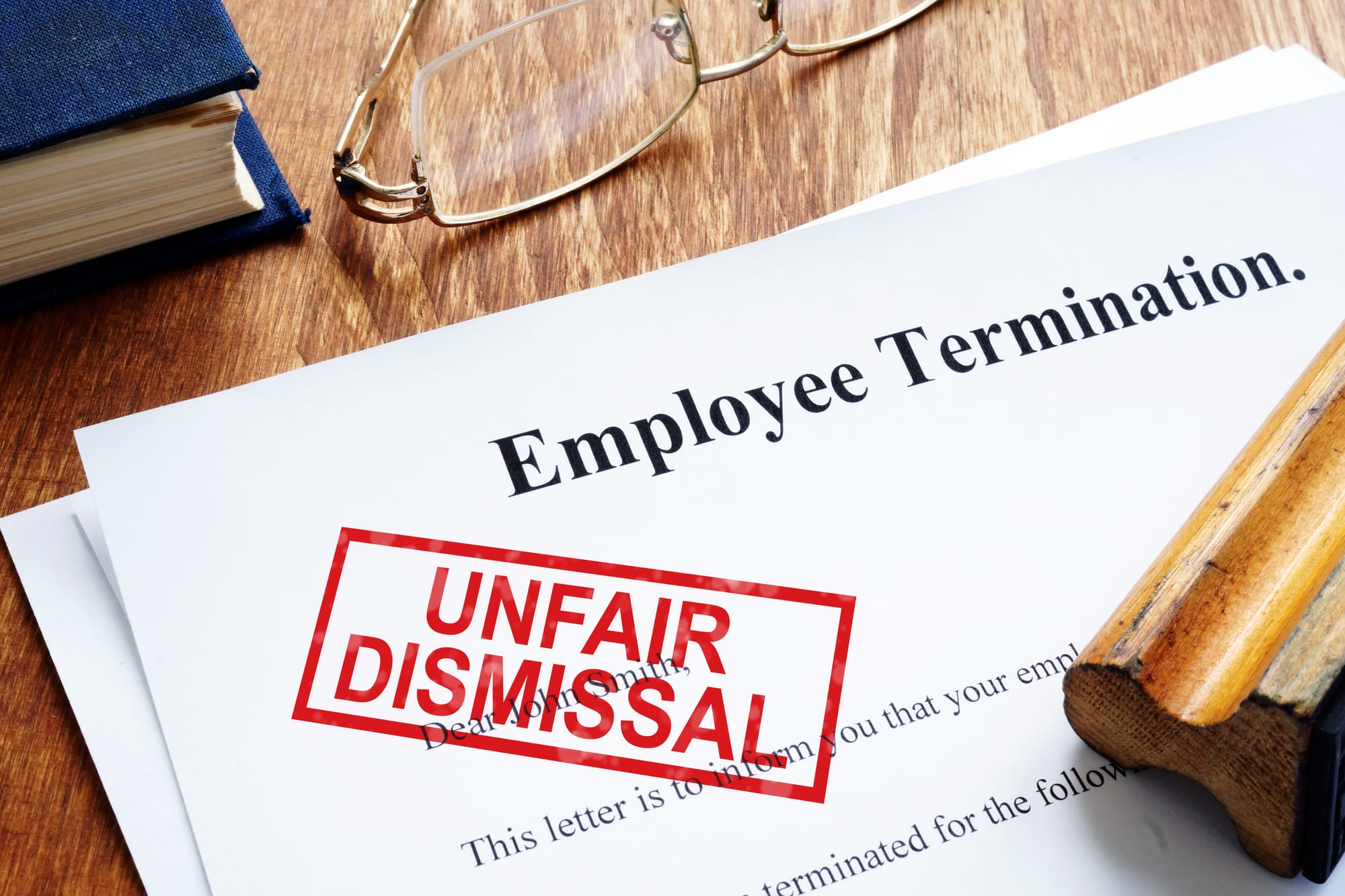
Unfair Dismissal in NSW: A Comprehensive Guide to Your Workplace Rights in 2026
Losing a job is one of the most stressful life events a person can experience. When that loss feels arbitrary, sudden, or fundamentally "wrong," it isn't just a financial blow—it’s a violation of your professional dignity. In New South Wales, the legal landscape surrounding employment law and unfair dismissal is designed to balance the scales between employer and employee. However, as we move through 2026, the rules have become more nuanced. With recent legislative updates and shifting income thresholds, navigating a claim at the Fair Work Commission (FWC) requires a clear understanding of your rights. Whether you are an employee seeking justice or an employer striving for compliance, this guide breaks down the essentials of unfair dismissal NSW.
1. What is Unfair Dismissal?
Under the Fair Work Act 2009, a dismissal is considered "unfair" if the Commission finds that it was harsh, unjust, or unreasonable. While these terms often overlap, they carry distinct legal weights:
- Harsh: Focuses on the economic and personal impact on the employee (e.g., dismissing someone a week before their pension vests).
- Unjust: Focuses on whether the employee was actually guilty of the alleged conduct.
- Unreasonable: Focuses on the evidence. Did the employer have enough proof to justify the decision?
It is important to note that a dismissal is not unfair if it was a genuine redundancy or if it followed the Small Business Fair Dismissal Code.
2. Eligibility: Can You Make a Claim?
Not every terminated employee is eligible to file for unfair dismissal. To be protected by the national workplace relations system in NSW, you must meet the following criteria as of 2026:
The Minimum Employment Period
You must have been employed for a minimum period before you can lodge a claim:
- 6 Months: If your employer has 15 or more employees.
- 12 Months: If your employer is a small business (fewer than 15 employees).
The High-Income Threshold (2025–2026)
For the financial year starting 1 July 2025, the high-income threshold is set at $183,100.If you earn more than this amount and are not covered by a modern award or an enterprise agreement, you are generally ineligible to make an unfair dismissal claim. However, you may still have access to other legal avenues like general protections or breach of contract claims.
The 21-Day Deadline
This is the most critical hurdle. You have exactly 21 days from the date your dismissal took effect to lodge your application with the Fair Work Commission. The Commission rarely grants extensions except in truly "exceptional circumstances."
3. The "Harsh, Unjust, or Unreasonable" Test
When the FWC reviews a claim, they don't just look at why you were fired; they look at how it happened. This is known as procedural fairness. Even if an employer has a valid reason (such as poor performance), the dismissal could still be ruled unfair if:
- The employee was not notified of the reason.
- The employee was not given an opportunity to respond.
- The employer unreasonably refused to allow a support person to be present at discussions.
- In cases of underperformance, the employee was not warned or given a chance to improve.
4. Small Business Rules: The Fair Dismissal Code
NSW is a hub for small enterprises. Because these businesses often lack dedicated HR departments, the law provides them with a simplified roadmap: the Small Business Fair Dismissal Code. If a small business employer follows this code, the dismissal will likely be deemed fair. The code allows for summary dismissal (dismissal without notice) in cases of serious misconduct, such as theft, fraud, or violence. For other issues, the employer must provide a valid reason and a warning (preferably in writing).
5. Is it a "Genuine Redundancy"?
A common defense used by employers is that the role was redundant. However, for a redundancy to be "genuine" under Section 389 of the Act, three conditions must be met:
- The employer no longer required the job to be performed by anyone due to operational changes.
- The employer complied with any consultation obligations in the relevant award or agreement.
- It was not reasonable in all circumstances to redeploy the person within the employer’s enterprise (or an associated entity).
If an employer hires someone else to do the same job two weeks later, it was likely not a genuine redundancy, and a claim for wrongful termination NSW may be viable.
6. New in 2026: Strengthened Workplace Protections
The Industrial Relations and Other Legislation Amendment (Workplace Protections) Act 2025 has introduced significant changes that take full effect in 2026.
- Psychosocial Hazards: There is now a greater emphasis on mental health. If a dismissal is the result of an employee raising concerns about workplace stress or "toxic" environments, it may trigger general protections claims, which carry much higher penalties than standard unfair dismissal.
- Anti-Bullying & Harassment: The 2026 updates have expanded the power of the FWC to issue stop-bullying orders and increased the damages available for victims of sexual harassment to $100,000.
7. The Unfair Dismissal Process
Once an application is lodged, the process typically follows this path:
| Stage | What Happens |
| 1. Lodgement | You submit Form F2 and pay the filing fee. |
| 2. Employer Response | The employer submits their version of events (Form F3). |
| 3. Conciliation | A voluntary, confidential meeting led by a FWC conciliator to try and reach a settlement. Roughly 80% of cases settle here. |
| 4. Formal Hearing | If conciliation fails, the matter goes before a Member of the Commission for a final decision. |
8. Remedies: What Can You Achieve?
The primary remedy for unfair dismissal is reinstatement (getting your job back). However, because the relationship between employer and employee is often broken beyond repair, the most common outcome is compensation. In 2026, compensation is capped at the lesser of:
- 26 weeks of the employee’s pay.
- Half of the high-income threshold ($91,550).
Compensation is designed to replace lost wages, not to "punish" the employer or provide "pain and suffering" damages.
Conclusion: Taking the Next Step
Employment law is a fast-moving field, and the stakes are high for both sides. If you believe you have been unfairly dismissed, or if you are an employer facing a claim, acting quickly is essential. The 21-day clock is already ticking. At [Law Firm Name], we specialize in employment law advice tailored to the NSW jurisdiction. We help our clients navigate the complexities of the Fair Work Commission with clarity and confidence. Would you like me to draft a specific checklist for employees preparing for an FWC conciliation?
- Unfair dismissal NSW
- employment law
- Fair Work Commission claim
- wrongful termination NSW
- Procedural fairness Australia
- Small Business Fair Dismissal Code
- genuine redundancy
- employment lawyer Sydney
- high-income threshold 2026
- workplace rights NSW
- How to file for unfair dismissal in NSW
- 21-day limit for Fair Work claims
- unfair dismissal compensation cap 2026