Local Court hearing preparation: what to do and when
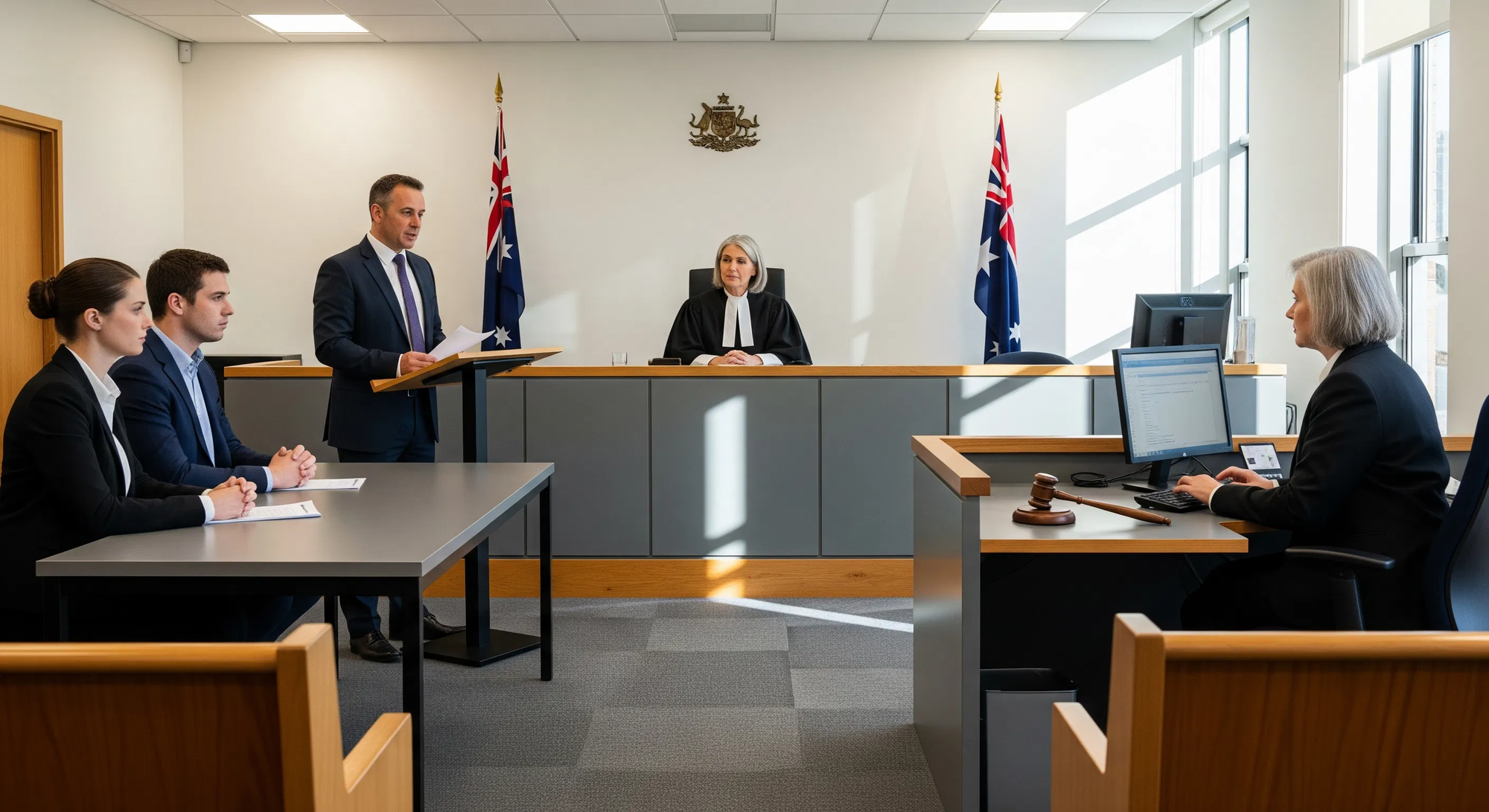
You do not lose a Local Court matter on the day because the magistrate was in a bad mood. You lose it because you turned up under-prepared, missing documents, unclear on what orders you need, or unable to answer basic questions about your evidence. Court is formal, fast-moving, and unforgiving of guesswork.If you are asking how to prepare for a local court hearing, the goal is simple: arrive ready to prove your position, respond to the other side, and ask for the orders you actually need - within the rules and within time.
First, get clear on what hearing this actually is
“Local Court hearing” can mean very different things in New South Wales. A first mention in a criminal matter is not a defended hearing. A directions hearing in a civil claim is not the final hearing. A list where the court expects you to narrow issues is not the day you run every witness.Read your court notice carefully and match it to the stage of the proceedings. If you are not sure, do not guess. The preparation for each step differs: what you file, what you bring, and what the magistrate is likely to do. The quickest way to look unprepared is to turn up ready for trial when the court is only listing the matter for timetable orders.
Work backwards from the orders you want
Court is not a general complaint desk. The magistrate will be focused on what orders can be made and whether the evidence supports them.In civil matters, that might be judgment for a sum of money, dismissal, a payment plan, costs, or procedural orders about evidence and timetables. In criminal and traffic matters, it might be a withdrawal, a dismissal, a non-conviction order, a fine, a licence outcome, or sentencing submissions.Be precise. “I want it sorted” is not a position. If you cannot articulate what you are asking for, you will struggle to keep your evidence and submissions targeted.
Evidence wins hearings - not volume
A common mistake is bringing a thick bundle of papers and assuming the magistrate will hunt for the key points. They will not. Your job is to present relevant evidence, in an admissible form, that proves the elements you need to prove.
Separate the story from the proof
Your story matters, but court runs on proof. For example, in a building payment dispute, the important documents might be the contract, variations, invoices, progress claims, a defects list, photos taken on specific dates, and clear records of what was paid and when. In an employment dispute, it may be the contract, roster records, warnings, performance material, correspondence, and medical certificates where relevant.If you only have your recollection, the other side will call it opinion. Back your position with contemporaneous documents wherever possible.
Put your evidence into a clean, chronological brief
Do not arrive with screenshots scattered across your phone and loose papers in a shopping bag. Organise a folder that runs in date order. Where there is a chain of emails, print the full chain. Where there are text messages, capture the conversation with dates visible.Courts have little patience for a party who cannot find their own documents. A disciplined folder also helps you stay calm under pressure.
Understand what can (and cannot) be said
It depends on the type of hearing, but two traps appear again and again:First, hearsay. “My mate told me” generally carries little weight unless it comes in through proper evidence, such as an affidavit from that person.Second, opinions dressed up as facts. “The other driver was reckless” is an opinion. “They crossed the centre line at speed and clipped my front bumper” is a factual observation.If you are relying on someone else’s knowledge, consider whether you need them as a witness, or whether there is a document that proves the point without them.
Filing and service: miss this and you can be shut down
Preparation is not just what you bring. It is what you file and serve on time.If the court requires affidavits, witness statements, a bundle, a medical report, character references, or written submissions by a certain date, treat that deadline as immovable. Courts can refuse late material, or adjourn with costs consequences. Even where material is accepted, arriving late signals disorganisation and weakens your credibility.Also check service requirements. In many matters you must provide the other side with what you rely on. Surprising the other party on the day is rarely rewarded.
Prepare your “tight version” and your “full version”
Local Court lists are busy. Your matter may be called quickly and then stood down. The magistrate may give you five minutes, or they may give you longer. You need to be ready for both.Your tight version is the simplest pathway to your orders: the key facts, the key documents, and the key legal points, delivered calmly.Your full version contains the extra detail if the magistrate has questions or if the other side raises a point you must answer.If you cannot explain your case in two minutes without rambling, you are not ready.
Anticipate the other side’s best arguments
People prepare what they want to say and ignore what they are likely to hear. That is not strategy.Look at your weak spots. If there is a delay, explain it. If there is an unfavourable email, address it rather than hiding from it. If a witness is unreliable, do not pretend otherwise - work out what independent documents support the same point.This is where experienced advocacy matters: the court respects parties who confront the real issues and stay grounded in the evidence.
Settlement and negotiation: use the court date properly
A court date often creates the first serious opportunity to resolve the dispute. That is not a sign of weakness. It is commercial reality.Go in with a settlement position that is thought through. Know what you can accept, what you cannot, and why. If money is involved, have your numbers ready - the principal amount, interest if claimed, and realistic costs exposure.At the same time, do not accept a bad deal because you feel pressured in the corridor. The best settlements are informed: you understand your prospects, the likely range of outcomes, and what an adjournment or hearing will cost you in time, stress, and fees.
The day of court: practical discipline
Arrive early. Find your courtroom. Check the list. Turn your phone to silent. Dress conservatively. Bring paper copies even if you have everything electronically.If you are asked to go into court, stand when the magistrate enters and speak clearly. If you do not understand a question, say so and ask for it to be repeated. Avoid talking over anyone. Your tone matters. A calm, respectful presentation is persuasive in itself.If you are self-represented, be realistic about the pace. The court staff cannot give you legal advice. The magistrate must remain impartial. That means it is on you to know what you are asking for and why you are entitled to it.
Witnesses: reliability beats theatrics
If your matter involves witnesses, prepare them properly. They need to know the date, time, location, and what is expected. They should review their statement or affidavit and any key documents.Do not coach witnesses to “say the right thing”. That backfires. The court is looking for consistency and credibility. A witness who concedes what they do not know often appears more reliable than one who argues every point.If cross-examination is likely, ensure witnesses understand they must listen to the question, answer directly, and avoid speeches.
When to get a lawyer (and why it changes outcomes)
Some matters are straightforward. Many are not.If your dispute involves substantial sums, complex evidence, allegations of dishonesty, expert reports, potential licence loss, a criminal record, or reputational damage, legal representation is not a luxury. It is risk management.A lawyer does more than speak in court. They identify what actually needs to be proved, ensure evidence is in admissible form, manage filing and service, negotiate from a position of strength, and protect you from procedural mistakes that are hard to fix later.If you want principal-led preparation and courtroom-focused representation across New South Wales, you can speak with Cruz Lawyers about your Local Court matter and the most direct path to an outcome.
Contact our Principal Lawyer, Nicholas Cruz 24/7 on 0420 102 699 or send an email: nicholas@cruzlawyers.com.au
A disciplined checklist for how to prepare for a local court hearing
If you want a practical standard, use this in the week leading up to court. You should be able to answer “yes” to each item:
- I know what type of listing it is and what the court can do that day.
- I know the orders I want and the legal basis for them.
- My evidence is organised, dated, readable, and relevant.
- Anything that must be filed and served has been filed and served on time.
- I have prepared a short, clear outline of my main points and a longer version for questions.
- I can identify the other side’s strongest points and my responses.
- My witnesses (if any) are confirmed, prepared, and available.
- I have a realistic settlement position and authority to negotiate.
- I know where to go, when to arrive, and what I need to bring.
If you cannot tick several of these off, do not hope for the best. Fix the gaps now.A court hearing is not the place to find out what your case is. It is the place to prove it - with calm, disciplined preparation that makes your position hard to ignore.